
Disclosure: As an Amazon Associate, I earn from qualifying purchases. If you buy through links on this page, we may earn a small commission at no extra cost to you.
Choosing the best prosumer espresso machine on Amazon means stepping past entry thermoblock compromises into commercial-width 58mm hardware engineered for thermal stability, simultaneous steaming, and multi-year serviceability. Unlike starter machines constrained by sequential single heaters or non-standard portafilters, prosumer rigs divide neatly across PID-regulated dual boilers, classic E61 heat exchangers, stainless-lined dual thermoblocks, and compact boiler-thermoblock hybrids.
For this edition, we audited 18 North American 120V/60Hz prosumer listings actively stocked on Amazon US and narrowed the field to 10 verified machines in the over $1,000 tier—excluding off-Amazon dealer-only brands like Lelit, Profitec, ECM, and La Marzocco. Whether you are stepping up from our best espresso machines for home hub, comparing mid-range espresso machines under $1,000, or mapping out a full prosumer espresso setup around $3,000, every pick below is verified against 120V circuit rules, cooling-flush realities, and 58mm lug compatibility.
In This Guide
Quick Picks: Best Prosumer Espresso Machine at a Glance
#1 Best Overall
Rancilio Silvia Pro X Dual Boiler (Black)
Dedicated 0.3L brew and 1.0L steam stainless boilers with dual PIDs, soft infusion, shot timer, and commercial 58mm hardware on a standard 120V 15A plug. (Jump to audit)
#2 Best Feature-Rich Dual Boiler
Breville Dual Boiler (BES920XL)
Three-point PID stability with an actively heated 58mm group, customizable pre-infusion pressure/time, and effortless front water filling. (Jump to audit)
#3 Best E61 Heat Exchanger
Rocket Espresso Appartamento TCA
Milano-built 58mm E61 chrome classic upgraded with an insulated 1.8L stainless boiler and four-preset TCA temperature stability. (Jump to audit)
Side-by-Side Comparison: Top 10 Prosumer Espresso Machines
| Product & Award | Best For | Heating & 58mm Group | 120V Draw & Plug | Link |
|---|---|---|---|---|
| Rancilio Silvia Pro X (Black) Best Overall | Light roasts & daily simultaneous milk | Dual Stainless Boiler + Dual PID • Rancilio 58mm | 950W–1,000W (NEMA 5-15P) Over $1,000 | View on Amazon |
| Breville Dual Boiler (BES920XL) Best Feature-Rich Dual Boiler | Pre-infusion tuning & front-fill counters | Dual Boiler + Heated Group PID • Breville 58mm | 1,700W (NEMA 5-15P) Over $1,000 | View on Amazon |
| Rocket Appartamento TCA Best E61 HX With Temp Control | Classic E61 aesthetics & compact width | 1.8L Insulated HX + 4-Preset TCA • E61 58mm | 1,200W (NEMA 5-15P) Over $1,000 | View on Amazon |
| Diletta Bello+ E61 PID Best PID E61 Heat Exchanger | E61 upgrades with digital PID & timer | 1.8L Insulated HX + PID • E61 58mm | 1,500W (NEMA 5-15P) Over $1,000 | View on Amazon |
| Ascaso Steel DUO PID V3 (120V) Best Dual Thermoblock (20A) | Rapid warm-up on 20A circuits | Dual AISI 316 Thermoblock + Dual PID • Ascaso 58mm | 2,100W / 20A (NEMA 5-20P) Over $1,000 | View on Amazon |
| Diletta Mio Best Hybrid Value | Compact PID brew + fast steam on 15A | 400mL PID Brew Boiler + Steam Block • 58mm | 1,600W (NEMA 5-15P) Over $1,000 | View on Amazon |
| Rocket Appartamento 2.0 Best Mechanical E61 HX | Purist lever brewing & milk drinks | 1.8L Copper HX (Pressurestat) • E61 58mm | 120V / 60Hz (NEMA 5-15P) Over $1,000 | View on Amazon |
| Nuova Simonelli Oscar II Best High-Output Steam HX | Entertaining & timed volumetric dosing | 2.0L Copper HX • Simonelli 58mm | 1,200W / 10A (NEMA 5-15P) Over $1,000 | View on Amazon |
| Breville Oracle Jet (BES985BSS) Best Automated All-in-One | Hands-free 58mm grind, tamp & froth | Dual ThermoJet + Baratza Grinder • Breville 58mm | 1,400W–1,600W (NEMA 5-15P) Over $1,000 | View on Amazon |
| Ascaso Dream PID (120V) Best Retro PID Thermoblock | Straight espresso & tight 15A counters | Single Stainless Thermoblock + PID • Ascaso 58mm | 1,100W (NEMA 5-15P) Over $1,000 | View on Amazon |
Match Your Use Case: Choosing a Prosumer Workflow
Before selecting a machine, map how many milk drinks you pour consecutively, whether you experiment with light-roast single origins, and whether your kitchen outlet supports a standard 15A NEMA 5-15P plug or a dedicated 20A NEMA 5-20R circuit. Buyers focused exclusively on independent coffee and steam boilers can also inspect our dedicated dual-boiler espresso machines audit for deeper dual-PID comparisons.
| Buyer Scenario | Best Match | Why & Expected Outcome |
|---|---|---|
| All-around light-roast precision & simultaneous lattes | Rancilio Silvia Pro X Dual Boiler | Dual stainless boilers with dual PIDs eliminate cooling flushes and hold rock-steady brew heat on a standard 15A plug. |
| Pre-infusion experimentation under 18-in cabinets | Breville Dual Boiler (BES920XL) | Front water fill, heated 58mm group PID, and customizable pre-infusion pressure/duration make dialing effortless. |
| Iconic Italian E61 styling without pressurestat guesswork | Rocket Espresso Appartamento TCA | Insulated 1.8L boiler and four-preset TCA temperature control modernize the compact E61 chassis for steady milk service. |
| Fast morning readiness with a 20A kitchen circuit | Ascaso Steel DUO PID V3 (120V) | Dual stainless-lined thermoblocks heat rapidly and brew/steam simultaneously when fed by an electrician-installed 20A 5-20R outlet. |
| Compact PID brew accuracy without full dual-boiler cost | Diletta Mio Espresso Machine | 400 mL PID brass brew boiler pairs with a 1,000W steam thermoblock and external OPV in a narrow 15A footprint. |
| Automated 58mm household convenience | Breville Oracle Jet (BES985BSS) | Dual ThermoJet speed, 45-step Baratza burrs, and automated tamping/frothing deliver consistent 58mm drinks with minimal training. |
Detailed Audits: 10 Verified 120V Prosumer Espresso Machines
1. Rancilio Silvia Pro X Dual Boiler (Black) — Best Overall Prosumer Espresso Machine
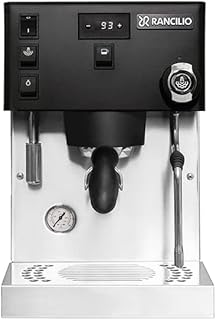
Quick Specs: Dual Stainless Steel Boilers (0.3L Brew + 1.0L Steam) + Dual PID | 58mm Rancilio Commercial Group (Non-E61) | 0–6s Programmable Soft Pre-Infusion, Shot Timer & Brew Gauge | 120V/60Hz, 950W–1,000W (NEMA 5-15P) | 2.0 L Reservoir | Price Tier: Over $1,000
Audit Score: 9.3 / 10
- Thermal Stability & Temperature Control (35%): 9.5 / 10
- Simultaneous Steam & Workflow (25%): 9.3 / 10
- Build, 58mm Group & Serviceability (20%): 9.4 / 10
- 120V Kitchen Fit & Value (20%): 8.8 / 10
Few prosumer rigs strike as clean a balance between commercial repairability and modern temperature control as the Rancilio Silvia Pro X Dual Boiler. Per Rancilio Group’s official Silvia Pro X specifications, it isolates extraction inside an insulated 0.3L stainless steel coffee boiler while dedicating a separate 1.0L boiler exclusively to steam and hot water. Dual PID controllers hold both vessels independently—eliminating the temperature swings and cooling flushes of heat-exchanger rivals—while a front-mounted brew pressure gauge, integrated digital shot timer, and adjustable 0–6 second soft infusion give light-roast drinkers repeatable dialing feedback.
Under North American electrical limits (CR-ESP-SYS-07), the 120V/60Hz Silvia Pro X is conservatively rated at 950W–1,000W with a standard NEMA 5-15P plug. Heater management prioritizes coffee-boiler stability during simultaneous brewing and steaming, so steam recovery takes slightly longer than European 230V units—an important reason never to apply 230V heat-up numbers to a US counter. Compared with the Breville Dual Boiler (BES920XL), the Rancilio trades front water filling and pressure-variable pre-infusion for a simpler, heavier-gauge stainless chassis and decades of commercial parts support; compared with the Rocket Appartamento TCA, it delivers far stricter degree-level temperature control.
Buyer Verification Alert: Aftermarket 58mm bottomless portafilters must explicitly list Rancilio 2-ear group compatibility—E61 and Breville 58mm portafilters will not lock into the Silvia Pro X group. Additionally, never fill the tank with zero-TDS distilled water, as the conductive level probe requires dissolved minerals to register water height.
Pros
- Independent 0.3L brew and 1.0L steam stainless boilers with dual PIDs eliminate HX cooling flushes
- Includes 0–6 second programmable soft pre-infusion, digital shot timer, brew pressure gauge, and wake-up timer
- Efficient 950W–1,000W 120V NEMA 5-15P rating runs reliably on standard 15A North American circuits
- Heavy stainless frame and Rancilio commercial 58mm group offer long-term gasket and valve serviceability
Cons
- 120V heater allocation slows back-to-back steam recovery compared with 230V specifications
- Top-access water reservoir sits beneath cup-warmer tray, crowding standard 18-inch upper wall cabinets
- Relatively shallow drip tray leaves tight clearance for taller mugs resting on thick 0.1 g scales
Verdict: Buy it if you want the most dependable all-around 120V dual-boiler platform on Amazon for both light roasts and multi-drink milk entertaining. Skip it if you need front water refilling or rapid sub-minute startup. Pair it with a 64mm+ espresso-rated grinder, a low-profile 0.1 g scale, and SCA-range water.
2. Breville Dual Boiler (BES920XL) — Best Feature-Rich 58mm Dual Boiler

Quick Specs: Dual Stainless Steel Boilers (Brew + 950 ml Steam) + Actively Heated 58mm Group | 58mm Breville Lug Pattern | Programmable Pre-Infusion Duration & Pressure + Auto-On | 120V/60Hz, 1,700W (NEMA 5-15P) | 2.5 L Front-Fill Tank | Price Tier: Over $1,000
Audit Score: 9.1 / 10
- Thermal Stability & Temperature Control (35%): 9.4 / 10
- Simultaneous Steam & Workflow (25%): 9.1 / 10
- Build, 58mm Group & Serviceability (20%): 8.6 / 10
- 120V Kitchen Fit & Value (20%): 9.1 / 10
If your espresso priorities center on extraction science and kitchen ergonomics rather than traditional Italian chrome, the Breville Dual Boiler (BES920XL) packs more thermal engineering into its price bracket than virtually any rival. According to Breville USA’s BES920 specifications, a dedicated PID-regulated stainless espresso boiler feeds an actively heated 58mm group head equipped with its own embedded PID sensor, preventing temperature drop as water exits the boiler. Simultaneously, a 950 ml stainless steam boiler powers an articulated three-hole wand and dedicated hot-water spout.
Few machines under or near this tier match its programmability: you can adjust both pre-infusion duration and pre-infusion pump pressure percentage directly on the LCD interface, pull timed or volumetric shots, and set an auto-start morning timer. Kitchen ergonomics are equally thoughtful thanks to a front-accessible water fill funnel and a drop-down rear swivel foot that lets you slide the 30-plus-pound machine forward cleanly. Compared with the Rancilio Silvia Pro X, the BES920XL wins on pre-infusion tunability and front-fill cabinet clearance, though its 1,700W draw leaves less headroom on shared 15A circuits and its internal O-ring density demands strict water discipline.
Buyer Verification Alert: Breville’s 58mm portafilter uses angled ear lugs unique to BES920/980/990 machines—standard E61 bottomless portafilters will not fit (CR-ESP-ACC-01). Keep electric kettles off the same 15A branch circuit while the 1,700W heater runs, and strictly avoid pure distilled water in its conductive-probe boilers.
Pros
- Three-zone PID regulation across brew boiler, 950 ml steam boiler, and actively heated 58mm group head
- Customizable pre-infusion duration and pressure alongside volumetric buttons, shot clock, and auto-on timer
- Front water fill port and integrated rear swivel foot simplify placement beneath standard 18-inch US wall cabinets
- Includes single-wall and dual-wall 58mm baskets, razor trimming tool, and dedicated Americano water spout
Cons
- Proprietary Breville 58mm portafilter lug pattern locks out universal E61 aftermarket portafilters
- 1,700W peak load at 120V leaves minimal margin for sharing a 15A kitchen circuit with kettles or toasters
- Complex internal solenoids and O-rings require careful manufacturer-approved water filtration and descaling
Verdict: Buy it if you prioritize pre-infusion tuning, degree-accurate thermal control, and front-fill convenience over traditional E61 styling. Skip it if you want simple mechanical plumbing or universal E61 portafilter accessories. Budget for a dedicated single-dose or hopper espresso burr grinder and Breville-matched tank filters.
3. Rocket Espresso Appartamento TCA — Best E61 Heat Exchanger With Temp Control

Quick Specs: 1.8L Insulated Stainless Heat-Exchanger Boiler + 4-Preset TCA Hybrid PID | True 58mm E61 Thermosiphon Group | Manual Lever Control + Standby Mode | 120V/60Hz, 1,200W (NEMA 5-15P) | 270 x 448 x 358 mm (10.6 x 17.6 x 14.1 in) | Price Tier: Over $1,000
Audit Score: 8.9 / 10
- Thermal Stability & Temperature Control (35%): 8.8 / 10
- Simultaneous Steam & Workflow (25%): 9.0 / 10
- Build, 58mm Group & Serviceability (20%): 9.3 / 10
- 120V Kitchen Fit & Value (20%): 8.5 / 10
For buyers drawn to hand-built Milanese stainless bodywork and mechanical E61 lever ritual, the Rocket Espresso Appartamento TCA meaningfully refines the classic Appartamento formula. Per Rocket Espresso’s official TCA specifications, this revision transitions from a traditional uninsulated copper boiler and pressurestat to an insulated 1.8L stainless steel heat-exchanger boiler governed by Temperature Control Adjustment (TCA)—a four-preset hybrid PID algorithm paired with an energy-saving standby mode.
Because the Appartamento TCA uses a true 58mm E61 thermosiphon group, you unlock broad aftermarket compatibility with E61 bottomless portafilters, precision baskets, and E61 flow-control kits (CR-ESP-01). Compared with the legacy Rocket Appartamento 2.0, the TCA holds steadier idle temperatures, lowers standby heat loss, and reduces the aggressive cooling flushes demanded by older pressurestat HX designs (CR-ESP-02). Compared with the Diletta Bello+ E61 PID, Rocket brings rounded side-panel metalwork and a 1,200W 120V footprint, while the Bello+ includes an external digital PID screen and shot timer.
Buyer Verification Alert: Confirm the Amazon US seller specifies the 115V–120V / 60Hz 1,200W North American configuration with a NEMA 5-15P plug rather than a 220–240V export unit. Also measure counter depth carefully: the 448 mm (17.6 in) chassis extends near the front edge of standard 24-inch countertops.
Pros
- Four-preset TCA hybrid PID control stabilizes brew readiness far better than older pressurestat HX designs
- Insulated 1.8L stainless steel boiler delivers strong simultaneous steaming and cuts standby energy waste
- True 58mm E61 group accepts standard E61 bottomless portafilters, shower screens, and flow-control upgrades
- Slim 270 mm (10.6 in) width fits compact espresso stations while retaining 22 kg (48.5 lb) Italian build heft
Cons
- Heavy brass E61 thermosiphon group still needs an extended cold-start warm-up before stabilizing
- Lacks a digital shot timer, dedicated brew-pressure gauge, or 1-degree numeric PID display
- Exposed hot E61 group metal reaches scalding temperatures during standby operation
Verdict: Buy it if you want authentic Milano E61 craftsmanship in a compact width with modernized four-level temperature management. Skip it if you want sub-10-minute morning heat-up or 1-degree PID control for ultra-light roasts. Pair with a 0.1 g timer scale since the machine omits a built-in shot timer.
4. Diletta Bello+ E61 PID Espresso Machine — Best PID-Controlled E61 Heat Exchanger

Quick Specs: 1.8L Insulated Stainless Heat-Exchanger Boiler + PID | True 58mm E61 Group | OLED Shot Timer + Programmable Pre-Infusion + Dual Gauges | 120V/60Hz, 1,500W (15A, NEMA 5-15P) | Price Tier: Over $1,000
Audit Score: 8.8 / 10
- Thermal Stability & Temperature Control (35%): 8.7 / 10
- Simultaneous Steam & Workflow (25%): 9.0 / 10
- Build, 58mm Group & Serviceability (20%): 9.0 / 10
- 120V Kitchen Fit & Value (20%): 8.6 / 10
Built by hand in Milan for Seattle Coffee Gear’s Diletta lineup, the Diletta Bello+ closes the feature gap between classic Italian heat exchangers and modern PID precision. While traditional HX machines leave you guessing boiler pressure and timing shots on a separate watch, Diletta’s Bello+ specification embeds a crisp OLED PID controller with an automatic shot timer, programmable pre-infusion, eco standby mode, and dual boiler/brew pressure gauges inside a mirror-polished stainless enclosure.
Its 1.8L insulated stainless steel boiler runs at 1,500W on a standard 120V 15A NEMA 5-15P receptacle, delivering sustained steam pressure alongside concurrent espresso pulls. Compared with the Rocket Appartamento TCA, the Bello+ supplies far better telemetry (visible temperature target, shot timer, and brew-pressure gauge) at the cost of a slightly deeper footprint. Still, remember CR-ESP-02: even PID-regulated heat exchangers regulate the steam boiler rather than the brew water directly, so a brief cooling flush remains smart practice after long idle periods.
Buyer Verification Alert: Confirm the listing states “Bello+” (with PID, shot timer, and eco mode) rather than the earlier non-PID Bello model. Use remineralized water within SCA hardness guidelines—never zero-TDS distilled water—so the boiler level probe functions properly.
Pros
- Combines a true 58mm E61 group with digital PID control, OLED shot timer, and programmable pre-infusion
- 1.8L insulated stainless boiler provides vigorous simultaneous steaming on a standard 15A 120V outlet
- Dual steam and brew pressure gauges simplify OPV diagnostics and shot troubleshooting
- Eco standby mode reduces idle power draw when left ready on the counter
Cons
- Indirect HX brew-water heating still warrants a quick cooling flush after extended idle periods (CR-ESP-02)
- E61 brass thermosiphon mass needs substantial preheating before first-shot thermal equilibrium
- Requires dedicated espresso grinder and remineralized water to protect conductive sensors
Verdict: Buy it if you want a true 58mm E61 heat exchanger with modern PID, shot-timer, and pre-infusion visibility right out of the box. Skip it if you prefer direct dual-boiler temperature isolation or fast 5-minute startup. Adding a verified E61 flow-control kit later turns it into a full manual profiling bench.
5. Ascaso Steel DUO PID V3 (120V, Black) — Best Fast-Heating Dual Thermoblock (20A)

Quick Specs: Dual AISI 316 Stainless-Lined Thermoblocks + Dual PID | 58mm Ascaso Commercial Portafilter | 0–5s Pre-Infusion, Volumetric Dosing, Shot Timer & External OPV | 120V/60Hz, 2,100W, 20A (NEMA 5-20P) | 2.0L Side-Access Tank | Price Tier: Over $1,000
Audit Score: 8.7 / 10
- Thermal Stability & Temperature Control (35%): 9.0 / 10
- Simultaneous Steam & Workflow (25%): 8.7 / 10
- Build, 58mm Group & Serviceability (20%): 8.8 / 10
- 120V Kitchen Fit & Value (20%): 8.0 / 10
Traditional dual boilers and E61 heat exchangers demand 15 to 40 minutes of morning preheating and leave stagnant water sitting inside metal vessels. Per Ascaso USA’s Steel DUO PID specifications, the Steel DUO PID V3 attacks that bottleneck with two independent thermoblocks lined in food-safe AISI 316 stainless steel—one dedicated strictly to brew water, the other exclusively to steam—allowing simultaneous brewing and steaming with fast heat-up and fresh water flushed through every shot.
Its feature list rivals much pricier prosumer rigs: degree-by-degree PID brew and steam control, programmable 0–5 second pre-infusion, volumetric single/double buttons, digital shot timer, side-loading 2.0L reservoir, and an externally adjustable over-pressure valve beside an analog pressure gauge. Compared with the Rancilio Silvia Pro X, the Ascaso warms up far faster and simplifies OPV adjustments, yet trades away heavy boiler steam force for pulsating thermoblock steam—and introduces a strict North American 20-amp electrical requirement (CR-ESP-SYS-01).
Buyer Verification Alert (CR-ESP-SYS-01): The 120V Ascaso Steel DUO PID V3 is rated near 2,100W / 20A and ships with a horizontal-blade NEMA 5-20P plug. It requires a dedicated 20-amp branch circuit and a NEMA 5-20R receptacle installed by a licensed electrician—never defeat a 20A plug with unapproved outlet adapters. Also verify Ascaso 58mm lug fit when buying aftermarket portafilters.
Pros
- Dual stainless-lined AISI 316 thermoblocks deliver rapid warm-up and simultaneous brew/steam workflow
- Dual PID, volumetric dosing, shot timer, programmable pre-infusion, and external OPV tuning built in
- Side-loading 2.0L visible water tank slides out easily underneath low kitchen cabinets
- Barista workspace LED light, walnut handle hardware, and cool-touch 360-degree steam wand
Cons
- 2,100W / 20A NEMA 5-20P plug requires a 20A NEMA 5-20R receptacle, blocking standard 15A 5-15R outlets
- Thermoblock steam pressure is gentler and takes longer on large 16–20 oz pitchers than 1.8L HX boilers
- Ascaso 58mm portafilter ears differ from E61 and Breville patterns
Verdict: Buy it if your kitchen already has (or can add via an electrician) a 20A NEMA 5-20R outlet and you value fast morning readiness plus volumetric convenience. Skip it if you only have 15A outlets or steam large multi-latte pitchers back-to-back. Confirm V3 generation status on the Amazon listing before checkout.
6. Diletta Mio Espresso Machine — Best Hybrid Boiler-Thermoblock Value

Quick Specs: 400 mL Brass PID Brew Boiler + Dedicated 1,000W Steam Thermoblock | 58mm Quick Mill/Diletta Group | Digital Shot Timer + External OPV Adjustment | 120V/60Hz, 1,600W (15A, NEMA 5-15P) | Side-Load Tank | Price Tier: Over $1,000
Audit Score: 8.6 / 10
- Thermal Stability & Temperature Control (35%): 8.8 / 10
- Simultaneous Steam & Workflow (25%): 8.3 / 10
- Build, 58mm Group & Serviceability (20%): 8.6 / 10
- 120V Kitchen Fit & Value (20%): 8.9 / 10
The Diletta Mio solves a clever engineering problem for apartment prosumers who want dedicated PID espresso stability without paying for—or waiting to heat—a massive dual boiler. According to Diletta Espresso’s Mio specifications, it pairs a 400 mL PID-regulated brass brew boiler directly above the 58mm group head with a completely independent 1,000W steam thermoblock. Because the brew boiler never doubles as a steam vessel, you avoid single-boiler temperature surfing and heat-exchanger cooling flushes alike.
Even better for small kitchens, the Mio includes an externally accessible OPV screw, a digital shot timer, a side-access water reservoir, and a standard 1,600W 120V NEMA 5-15P plug. Compared with the Diletta Bello+ E61 PID, the Mio heats noticeably faster, takes up less counter space, and regulates brew temperature directly via PID rather than indirectly through an HX tube. Compared with the Ascaso Steel DUO PID V3, the Mio sacrifices a dedicated brew thermoblock’s instant purge for a traditional brass brew boiler while working comfortably on standard 15A residential outlets.
Buyer Verification Alert: The Mio uses Quick Mill/Diletta 58mm portafilter ears—do not buy standard E61 portafilters expecting them to lock cleanly. At 1,600W combined draw on 120V, avoid operating a microwave or kettle simultaneously on the same 15A branch circuit.
Pros
- 400 mL brass PID brew boiler holds direct espresso temperatures with zero HX cooling flushes
- Independent 1,000W steam thermoblock enables rapid or concurrent steaming on a standard 15A 120V outlet
- External OPV dial, digital shot timer, and side-loading water tank simplify tight-counter workflows
Cons
- Steam thermoblock trails 1.0L–2.0L boilers when texturing large 16–20 oz milk pitchers
- Quick Mill/Diletta 58mm portafilter lug pattern limits third-party E61 handle swaps
- 400 mL brew boiler is tuned for 1–2 drinks per session rather than nonstop café throughput
Verdict: Buy it if you make one or two milk drinks at a time and want direct PID brew-boiler stability plus external OPV control on a compact 15A counter. Skip it if you routinely steam large pitchers for guests. Pair it with a 12 oz (350 ml) frothing pitcher matched to its thermoblock steam output.
7. Rocket Espresso Appartamento 2.0 — Best Classic Mechanical E61 Heat Exchanger

Quick Specs: 1.8L Copper Heat-Exchanger Boiler (Pressurestat) | True 58mm E61 Group | Manual E61 Lever + Low-Water Shot Completion Sensor | 120V/60Hz (NEMA 5-15P) | 274 x 439.5 x 360 mm | Price Tier: Over $1,000
Audit Score: 8.4 / 10
- Thermal Stability & Temperature Control (35%): 8.1 / 10
- Simultaneous Steam & Workflow (25%): 8.8 / 10
- Build, 58mm Group & Serviceability (20%): 9.1 / 10
- 120V Kitchen Fit & Value (20%): 8.0 / 10
For espresso traditionalists who prefer tactile mechanical relays over OLED menus, the Rocket Espresso Appartamento 2.0 preserves the pure pressurestat-driven E61 formula. Inside its iconic circular-cutout stainless shell sits a 1.8L copper heat-exchanger boiler paired with a mechanical E61 thermosiphon group and low-water reservoir protection that allows an active shot to finish before locking out the heating element.
However, compatibility rule CR-ESP-02 applies directly here: because a pressurestat maintains the steam boiler well above 120 °C (248 °F) without direct PID brew-water feedback, stagnant water inside the thermosiphon heat-exchanger tube overheats when the machine sits idle. Expect to run a disciplined cooling flush before locking in your portafilter for medium or dark roasts. Compared with the Rocket Appartamento TCA, the 2.0 lacks boiler insulation and four-preset TCA temperature stability—making the TCA worth the step up for most buyers unless you specifically want classic mechanical simplicity at a slightly lower tier spot.
Buyer Verification Alert: Double-check the seller listing confirms 120V/60Hz North American power (not 230V/50Hz European stock) and remember that non-PID heat exchangers demand regular cooling flushes after idle periods to avoid scorched extractions.
Pros
- True 58mm E61 group guarantees effortless parts availability and aftermarket flow-control kit support
- 1.8L copper HX boiler produces dry, continuous steam simultaneous with espresso extraction
- Pure electro-mechanical layout avoids touchscreen boards that complicate long-term repairs
Cons
- Indirect pressurestat HX control requires consistent cooling flushes after idle waits (CR-ESP-02)
- No PID temperature screen, shot timer, or dedicated brew pressure gauge included
- Uninsulated copper boiler and heavy E61 brass group take considerable time to warm up
Verdict: Buy it if you enjoy classic mechanical E61 cooling-flush ritual and medium-to-dark roast milk drinks. Skip it if you brew light roasts or want built-in PID telemetry—step up to the Appartamento TCA or Diletta Bello+ instead. An E61 group-head thermometer is a smart day-one add-on.
8. Nuova Simonelli Oscar II Espresso Machine — Best High-Output Steam & Volumetric HX

Quick Specs: 2.0L Copper Heat-Exchanger Boiler | 58mm Nuova Simonelli Commercial Group | Timed Push-Button Dosing | 110V–120V / 60Hz, 1,200W (10A, NEMA 5-15P) | 3.0L Reservoir | Price Tier: Over $1,000
Audit Score: 8.3 / 10
- Thermal Stability & Temperature Control (35%): 7.9 / 10
- Simultaneous Steam & Workflow (25%): 9.1 / 10
- Build, 58mm Group & Serviceability (20%): 8.3 / 10
- 120V Kitchen Fit & Value (20%): 8.3 / 10
Where E61 machines prioritize mirror chrome, the Nuova Simonelli Oscar II channels commercial café lineage straight into milk-steaming muscle. According to Nuova Simonelli USA specifications, its 2.0L copper heat-exchanger boiler—the largest boiler in this roundup—feeds an actively heated group and a powerful articulated steam wand while drawing a gentle 1,200W (10A) at 110V–120V on a standard NEMA 5-15P plug.
Timed programmable single- and double-shot buttons speed up multi-drink mornings, and its 3.0L tank keeps refills infrequent when entertaining. Still, its compromises are clear when stacked against the Diletta Bello+ or Rancilio Silvia Pro X: stock factory Oscar II units lack a PID controller, pressure gauge, and externally adjustable OPV, and still require disciplined HX cooling flushes after idle waits (CR-ESP-02).
Buyer Verification Alert: Check whether the specific Amazon seller includes an installed OPV kit or ships stock factory hardware, and verify Nuova Simonelli 58mm portafilter compatibility before ordering bottomless handles (E61 lugs do not fit). Feed SCA-range remineralized water to protect the 2.0L copper boiler and conductive autofill sensor.
Pros
- Massive 2.0L copper HX boiler delivers commercial-grade continuous steam for back-to-back lattes
- Timed single/double shot buttons streamline repeatable household dosing alongside a 3.0L reservoir
- Low 1,200W (10A) 120V draw sits comfortably inside standard 15A residential circuit budgets
Cons
- No PID temperature readout or brew-pressure gauge; indirect HX heating requires cooling flushes (CR-ESP-02)
- Stock factory build lacks an accessible OPV adjustment unless fitted by an authorized dealer
- ABS side panels and proprietary Nuova Simonelli 58mm lugs feel less premium than all-steel E61 rivals
Verdict: Buy it if you pour large milk drinks for guests and want commercial 2.0L HX steam power at 10A/120V. Skip it if you want PID light-roast accuracy or out-of-the-box OPV tuning. Pair with a 20 oz pitcher for multi-drink steaming and a 0.1 g scale to monitor yield.
9. Breville Oracle Jet (BES985BSS) — Best Automated Prosumer All-in-One
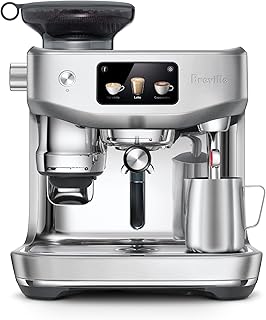
Quick Specs: Dual ThermoJet Heating + Built-In 45-Step Baratza Conical Grinder (~22g Auto Dose/Tamp) | 58mm Breville Lug Pattern | Touchscreen Hot & Cold Recipes + Auto MilQ Wand | 120V/60Hz, 1,400W–1,600W (NEMA 5-15P) | 2.3L Tank | Price Tier: Over $1,000
Audit Score: 8.5 / 10
- Thermal Stability & Temperature Control (35%): 8.4 / 10
- Simultaneous Steam & Workflow (25%): 9.1 / 10
- Build, 58mm Group & Serviceability (20%): 7.9 / 10
- 120V Kitchen Fit & Value (20%): 8.6 / 10
Not every prosumer shopper wants a separate grinder, scale, and manual tamping station cluttering the counter. Per Breville USA’s Oracle Jet specifications, the BES985BSS bridges commercial 58mm portafilters with push-button automation: a Dual ThermoJet heating architecture delivers near-instant readiness alongside an integrated 45-setting Baratza-made conical burr grinder that automatically grinds, doses roughly 22 grams, and tamps directly into the 58mm basket.
Its color touchscreen adds Barista Guidance—flagging fast or slow extractions and coaching grind adjustments—plus hands-free Auto MilQ texturing calibrated for dairy and plant milks, cold-brew recipes, and Wi-Fi updates. Compared with the Breville Dual Boiler (BES920XL), the Oracle Jet wins on convenience, startup speed, and one-box integration, while trading away boiler mass and external grinder flexibility. Remember CR-GRD-ESP-04: integrated conical burrs excel with medium and dark roasts, whereas light-roast purists frequently add a standalone flat-burr grinder later.
Buyer Verification Alert: Confirm the listing states the 120V/60Hz North American BES985BSS SKU (avoiding 230V/240V international specs). Use dry-surface roasted beans in the 340 g hopper—oily or flavored beans foul the automated dosing fan and burr chute—and remember Breville 58mm lugs are incompatible with E61 portafilters.
Pros
- Dual ThermoJet heating skips long boiler warm-ups while delivering automated 58mm grinding, ~22g dosing, and tamping
- 45-step Baratza-made conical burrs and on-screen Barista Guidance simplify dialing for mixed households
- Hands-free Auto MilQ steam wand plus cold-brew and cold-espresso menu presets
Cons
- Built-in hopper conical grinder limits single-dosing flexibility and light-roast clarity vs. standalone flat burrs (CR-GRD-ESP-04)
- Automated ~22g tamp fan assembly and touchscreen electronics add long-term maintenance complexity
- Breville 58mm portafilter lugs are proprietary and incompatible with E61 accessories
Verdict: Buy it if multiple household members want automated 58mm espresso, cold-brew options, and hands-free microfoam with almost zero warm-up wait. Skip it if you love manual puck prep, single-dose bean swapping, or mechanical boiler longevity. Keep Breville water filters stocked on schedule.
10. Ascaso Dream PID Espresso Machine (120V) — Best Compact Retro PID Thermoblock

Quick Specs: Single Stainless-Lined Thermoblock + PID | 58mm Ascaso Commercial Portafilter | Programmable Volumetric Buttons, Shot Timer & External OPV | 120V/60Hz, 1,100W (NEMA 5-15P) | 1.3L Tank | Price Tier: Over $1,000
Audit Score: 8.1 / 10
- Thermal Stability & Temperature Control (35%): 8.4 / 10
- Simultaneous Steam & Workflow (25%): 7.5 / 10
- Build, 58mm Group & Serviceability (20%): 8.4 / 10
- 120V Kitchen Fit & Value (20%): 8.1 / 10
Rounding out our audit is the Ascaso Dream PID (120V), a machine built for straight-espresso drinkers and tight counters where sculptural die-cast aluminum styling matters as much as PID precision. Beneath its curved shell, a single stainless-lined thermoblock pairs digital PID temperature regulation, programmable pre-infusion, volumetric single/double shot buttons, a digital shot timer, and an externally adjustable OPV alongside a 58mm commercial-width portafilter.
Unlike the 20-amp Ascaso Steel DUO PID V3, the Dream PID runs at a modest 1,100W on any standard 120V 15A NEMA 5-15P receptacle. That electrical friendliness comes with a clear workflow trade-off (CR-DRINK-ESP-03): because one thermoblock handles both tasks, brewing and steaming happen sequentially, and steam output lags behind boiler machines like the Diletta Mio or Silvia Pro X. For solo espresso drinkers pulling one morning latte, however, its speed and compact footprint remain uniquely charming.
Buyer Verification Alert: Confirm the Amazon listing explicitly states both “PID” and “120V” (standard NEMA 5-15P) rather than older non-PID thermostat Dream stock, and check Ascaso 58mm lug compatibility before ordering third-party bottomless portafilters.
Pros
- Stainless-lined PID thermoblock with shot timer, volumetric dosing, and external OPV in a compact footprint
- Low 1,100W / 15A 120V draw works on every standard NEMA 5-15R kitchen outlet without circuit strain
- Die-cast aluminum body and 58mm portafilter with single-wall and pressurized baskets
Cons
- Sequential single thermoblock slows workflow when preparing back-to-back milk drinks (CR-DRINK-ESP-03)
- Gentler thermoblock steam pressure trails 1.0L–2.0L boiler machines on larger milk pitchers
- Higher price-per-performance ratio than the #6 Diletta Mio if simultaneous steaming matters
Verdict: Buy it if you drink mostly straight espresso or one daily flat white and prioritize retro aluminum craft on a 15A counter. Skip it if you entertain guests with milk drinks or want dual-boiler power. Pair it with a 12 oz (350 ml) pitcher and an espresso-rated burr grinder.
Buying Guide: How to Choose the Best Prosumer Espresso Machine
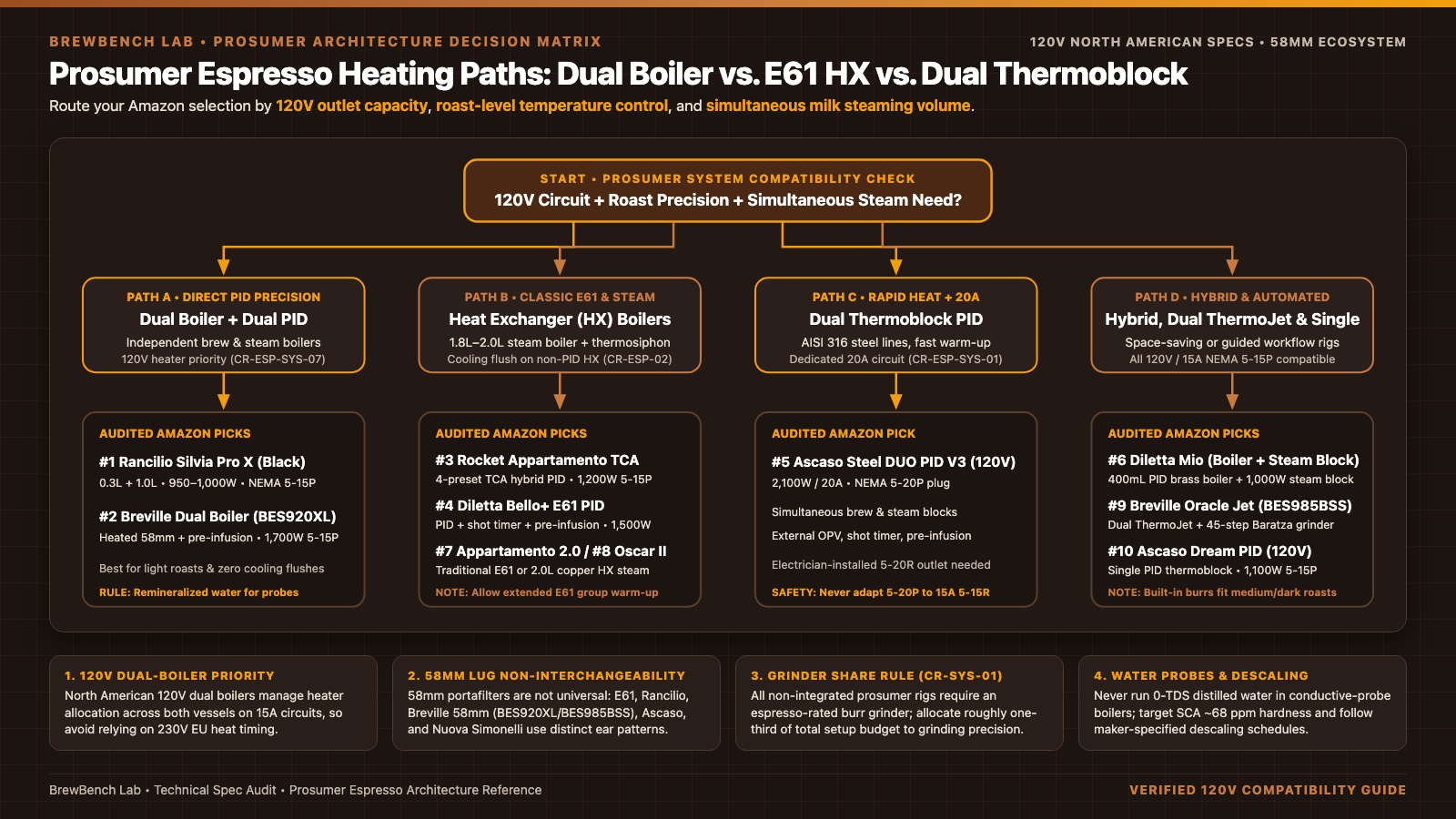
Shopping above $1,000 changes what separates a great counter setup from an expensive mismatch. At the prosumer level, nearly every machine delivers a ~9 bar brew target through a 58mm portafilter; the real differentiators are how heat is generated, how 120V North American circuits restrict heater logic, and which 58mm lug pattern your accessories require. Use these six compatibility checkpoints before ordering.
1. Heating Architectures: Dual Boiler vs. Heat Exchanger vs. Dual Thermoblock
- Dual Boiler (Rancilio Silvia Pro X, Breville Dual Boiler BES920XL): Separate PID-controlled brew and steam boilers isolate coffee extraction from steam pressure. You get direct degree-level temperature repeatability for light roasts, zero cooling flushes, and simultaneous steaming—at the cost of dual vessels to maintain and moderate boiler warm-up times.
- Heat Exchanger (Rocket Appartamento TCA, Diletta Bello+, Rocket Appartamento 2.0, Nuova Simonelli Oscar II): One large 1.8L–2.0L steam boiler houses an internal heat-exchanger tube that flashes fresh brew water on its way to the group. You gain towering steam capacity and simultaneous workflow, but brew temperature depends indirectly on steam-boiler pressure and E61 thermosiphon equilibrium.
- Dual Thermoblock & Dual ThermoJet (Ascaso Steel DUO PID V3, Breville Oracle Jet): Independent on-demand heating blocks heat fresh water per shot with fast morning startup and concurrent steaming. Steam texture is drier and steadier than entry thermoblocks, though large-pitcher flow trails 1.8L–2.0L boilers.
- Hybrid Brew Boiler + Steam Thermoblock (Diletta Mio): Combines direct PID brew-boiler accuracy with an independent steam thermoblock, bridging fast readiness and simultaneous milk capability on standard 15A outlets.
2. US 120V Electrical Rules & Dual-Boiler Priority Logic (CR-ESP-SYS-01 & CR-ESP-SYS-07)
Never rely on 230V European reviews when sizing a North American espresso bar. Standard US residential outlets supply 120V/60Hz on 15A (NEMA 5-15R, 1,800W peak / 1,440W continuous) or 20A (NEMA 5-20R, 2,400W peak / 1,920W continuous) branch circuits. Nine of our ten audited machines ship with standard NEMA 5-15P plugs ranging from 950W–1,000W (Silvia Pro X) up to 1,700W (Breville Dual Boiler). Avoid sharing that same branch circuit simultaneously with a 1,500W electric kettle or toaster.
Two critical rules separate prosumer shoppers from breaker headaches. First, under CR-ESP-SYS-07, 120V dual boilers like the Rancilio Silvia Pro X manage heater allocation between brew and steam vessels to stay inside 15A limits, making steam recovery slightly slower than European 230V models. Second, under CR-ESP-SYS-01, the 120V Ascaso Steel DUO PID V3 draws ~2,100W (20A) via a horizontal-blade NEMA 5-20P plug. Confirm you have a dedicated 20A circuit with a NEMA 5-20R receptacle—or hire a licensed electrician to install one. Never force a 20A plug into a 15A outlet with unapproved adapters, and never buy 220–240V EU/UK gray-market imports for a US kitchen.
3. Heat-Exchanger Cooling Flushes vs. Hybrid TCA/PID (CR-ESP-02)
If you choose a heat exchanger, understand CR-ESP-02 before your first shot. On traditional pressurestat HX units like the Rocket Appartamento 2.0 and Nuova Simonelli Oscar II, water sitting inside the heat-exchanger tube creeps toward steam-boiler temperature while the machine idles. Pulling an immediate shot without a brief cooling flush risks over-heated, bitter extraction. Newer models like the Rocket Appartamento TCA (4-preset hybrid PID) and Diletta Bello+ (full digital PID + insulated boiler) tame that drift significantly, though a quick 2–3 second flush after long idle pauses remains good practice.
4. 58mm Portafilter Lugs & The Grinder Budget Rule (CR-ESP-ACC-01 & CR-SYS-01)
Every machine on this list uses a 58mm basket diameter, yet 58mm portafilters are not universally interchangeable. True E61 machines (Rocket Appartamento TCA, Rocket Appartamento 2.0, Diletta Bello+) share the standard E61 two-ear lug geometry. Meanwhile, Rancilio (Silvia Pro X), Breville 58mm (BES920XL and Oracle Jet), Diletta Mio (Quick Mill pattern), Ascaso, and Nuova Simonelli each use distinct ear angles or wing thicknesses. Precision 58mm baskets and 58.5mm calibrated tampers generally cross over cleanly, but always confirm exact model compatibility before ordering bottomless portafilters.
Equally important, nine of our ten picks ship without a built-in grinder. Under compatibility rule CR-SYS-01, single-wall 58mm baskets cannot extract properly with blade mills or filter-only burr grinders; allocate roughly one-third or more of your combined machine-plus-grinder budget to an espresso-capable stepless or micro-stepped grinder (typically 64mm+ flat burrs or large conical single-dosers). Check our complete prosumer espresso setup blueprint around $3,000 for verified machine-plus-grinder pairings.
5. Water Hardness, Conductive Probes & Safe Descaling (CR-WTR-ESP-01/02/06)
Prosumer boilers punish neglected tap water. Following Specialty Coffee Association (SCA) water standards, aim near ~68 ppm (mg/L as CaCO3, roughly 4 grains per gallon) total hardness, ~40 ppm alkalinity, ~150 ppm TDS (75–250 ppm range), zero chlorine, and minimal chloride to prevent stainless and brass pitting. Check your tap water with basic hardness strips or your local municipal report before filling the tank.
Critically, never run pure un-remineralized distilled or zero-TDS reverse osmosis water in prosumer boilers with conductive water-level probes (Rancilio Silvia Pro X, Breville Dual Boiler, Diletta Bello+, Rocket, Oscar II). Conductive probes require dissolved minerals to detect fill height and avoid dry-firing errors. Use manufacturer-matched filter pouches or remineralized recipe water, and follow your owner’s manual strictly for descaling—many dual-boiler and HX makers advise against aggressive DIY acid concentrations or unassisted home boiler descaling.
6. Upgrade Roadmap & Secondary Intent: Prosumer vs. Mid-Range Under $1,000
Factor in realistic post-purchase bench costs: an espresso-capable burr grinder (around $200–$500+ depending on burr size), a low-profile 0.1 g scale that clears your spouts (verify height + cup height + 5 mm margin), a fitted 58.5mm tamper, cleaning detergent for blind-basket backflushing, and replacement filter pouches or silicone group gaskets. Not sure you actually need simultaneous dual-boiler steam? If you pour only one morning espresso or cappuccino and want fast heat-up at half the cost, compare our mid-range espresso machines under $1,000 before committing to over $1,000 prosumer hardware.
Methodology, Weighted Scoring Rubric & Excluded Models
Every score in this guide stems from an independent 120V specification and compatibility audit conducted by Daniel Park at BrewBench Lab—never paid sponsorships or fabricated lab telemetry. We verify official North American electrical plates, heating vessel materials, portafilter lug geometries, included basket kits, and manual maintenance protocols across active Amazon US listings. Review our complete auditing standards on the Editorial Evaluation Methodology page.
| Evaluation Criterion | Weight | What We Audited |
|---|---|---|
| Thermal Stability & Temperature Control | 35% | Heating architecture (dual boiler, HX, dual thermoblock, hybrid), PID vs. TCA vs. pressurestat precision, pre-infusion, and ~9 bar OPV delivery. |
| Simultaneous Steam & Workflow | 25% | True concurrent brew/steam capability, 120V heater priority recovery, shot timers, volumetric dosing, and cooling-flush burden. |
| Build, 58mm Group & Serviceability | 20% | 58mm lug compatibility (E61 vs. proprietary patterns), boiler/block metallurgy, OPV access, three-way venting, and US parts support. |
| 120V Kitchen Fit & Value | 20% | NEMA 5-15P vs. 5-20P compliance, 18-inch cabinet clearance, reservoir access, scale/cup clearance, and feature value per tier. |
Models We Audited & Excluded
Models We Audited & Excluded (And Why)
- Lelit Bianca V3 & Lelit Mara X (PL62X): Excluded as Amazon buy-intent picks because Lelit distributes through authorized specialty espresso dealers rather than official Amazon US storefront inventory.
- Profitec Pro 500 & Profitec Pro 600: Excluded from Amazon roundup slots because Profitec sells exclusively via off-Amazon North American specialty dealers with no verified primary Amazon US catalog fulfillment.
- ECM Synchronika & ECM Mechanika: Excluded as Amazon-absent dealer-only prosumer machines whose warranty coverage and retail distribution sit outside verified Amazon US channels.
- La Marzocco Linea Micra & Linea Mini: Excluded from Amazon buy picks because La Marzocco does not retail directly on Amazon US, placing saturated-group dual boilers in explainer-only coverage.
- 230V EU/UK Gray-Market Prosumer Imports: Disqualified under CR-ESP-SYS-01 because 220–240V 50Hz European machines cannot safely operate on North American 120V household outlets.
Authoritative Manufacturer & Technical References
- Rancilio Group — Silvia Pro X Official Specifications (120V/60Hz 950W–1,000W dual-boiler and soft-infusion data)
- Breville USA — Dual Boiler (BES920) Official Specifications (heated 58mm group PID, 950 ml steam boiler, 120V specs)
- Breville USA — Oracle Jet (BES985) Official Specifications (Dual ThermoJet, 45-step Baratza burrs, 58mm group)
- Rocket Espresso — Appartamento & Appartamento TCA Specifications (1.8L HX boiler, E61 group, TCA presets, 120V 1,200W)
- Diletta Espresso — Bello+ & Mio Specifications (E61 1.8L PID HX vs. 400 mL brass PID brew boiler + 1,000W steam block)
- Ascaso USA — Steel DUO PID & Dream PID 120V Specifications (AISI 316 thermoblocks, 20A NEMA 5-20P vs. 1,100W 15A)
- Nuova Simonelli USA — Oscar II Official Specifications (2.0L copper HX boiler, 110–120V 1,200W 10A NEMA 5-15P)
- Specialty Coffee Association (SCA) — Water Quality Standards (hardness, alkalinity, TDS, and chloride protection targets)
Continue Your Audit
Frequently Asked Questions About Prosumer Espresso Machines
What defines the best prosumer espresso machine compared with a consumer unit?
A prosumer espresso machine pairs commercial-width 58mm portafilters with dedicated thermal stability—dual PID boilers, heat exchangers, or stainless-lined dual thermoblocks. It also regulates brew pressure near ~9 bar via an over-pressure valve, supports simultaneous or rapid steaming, and uses serviceable brass or stainless internals built for years of daily shots.
Should I buy a dual boiler or an E61 heat-exchanger machine?
Choose a dual boiler like the Rancilio Silvia Pro X or Breville Dual Boiler if you pull light roasts or want degree-exact brew temperature with zero cooling flushes. Choose an E61 heat exchanger like the Rocket Appartamento TCA or Diletta Bello+ if you love classic chrome styling, massive steam power, and E61 flow-control compatibility.
Do 120V prosumer espresso machines on Amazon require a 20-amp outlet?
Nine of our ten audited picks use standard 120V NEMA 5-15P plugs for 15-amp household outlets, provided you avoid running a kettle or toaster on the same circuit. Only the 2,100W Ascaso Steel DUO PID V3 ships with a 20-amp NEMA 5-20P plug requiring a licensed electrician to install a 5-20R receptacle.
Why do 120V dual boilers behave differently from 230V European models?
North American 120V dual boilers stay within residential 15-amp limits by using heater priority logic or lower-wattage elements than 230V European twins. For example, the US Rancilio Silvia Pro X runs at 950W–1,000W, prioritizing brew-boiler stability during simultaneous operation rather than matching European steam-recovery speeds.
Are all 58mm prosumer portafilters interchangeable across brands?
No—58mm basket width is shared across precision baskets, but portafilter locking ears differ sharply. E61 machines (Rocket, Diletta Bello+) share one standard, while Rancilio, Breville 58mm (BES920XL and BES985BSS), Ascaso, and Nuova Simonelli each use proprietary lug angles or thicknesses.
What water should I put in a prosumer dual-boiler or heat-exchanger espresso machine?
Never run pure un-remineralized distilled or zero-TDS reverse osmosis water in boilers with conductive level probes, because the sensor needs dissolved minerals to detect water height. Target SCA guidelines (~68 ppm CaCO3 hardness, ~40 ppm alkalinity, ~150 ppm TDS, zero chlorine) and follow your machine manual’s exact descaling rules.
Final Verdict: Which Best Prosumer Espresso Machine Should You Buy?
Choosing the best prosumer espresso machine comes down to matching thermal architecture to your daily espresso and milk routine. For most serious home baristas shopping on Amazon US, the Rancilio Silvia Pro X Dual Boiler earns #1 overall for pairing dual stainless PID boilers, soft pre-infusion, and commercial 58mm reliability on a standard 15A 120V outlet. If you want programmable pre-infusion pressure and front-fill cabinet ease, pick the Breville Dual Boiler (BES920XL); if classic Milanese E61 metalwork calls to you, choose the modernized Rocket Appartamento TCA or PID-equipped Diletta Bello+; and if your kitchen includes a dedicated 20A 5-20R circuit, the Ascaso Steel DUO PID V3 delivers unmatched thermoblock speed.


